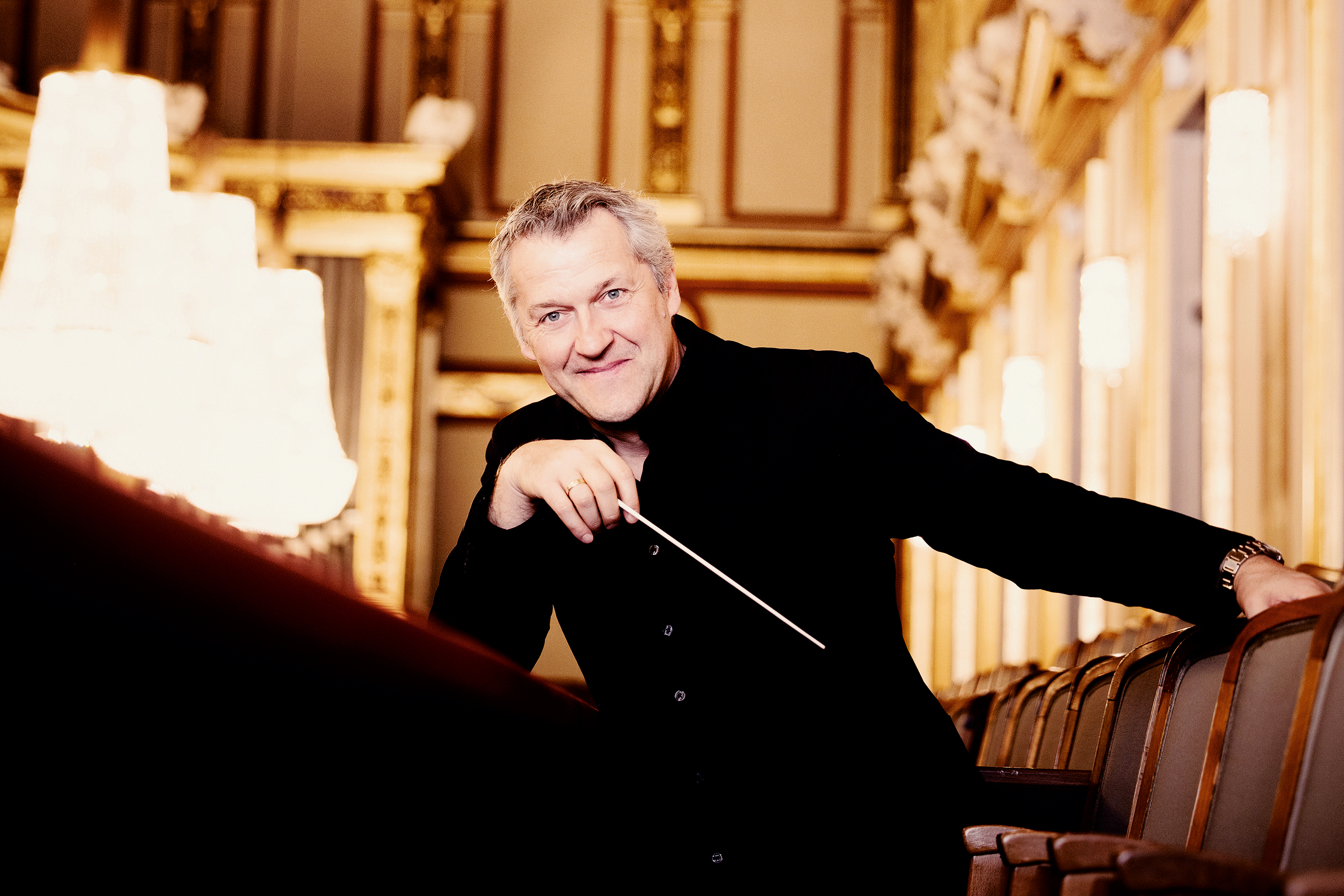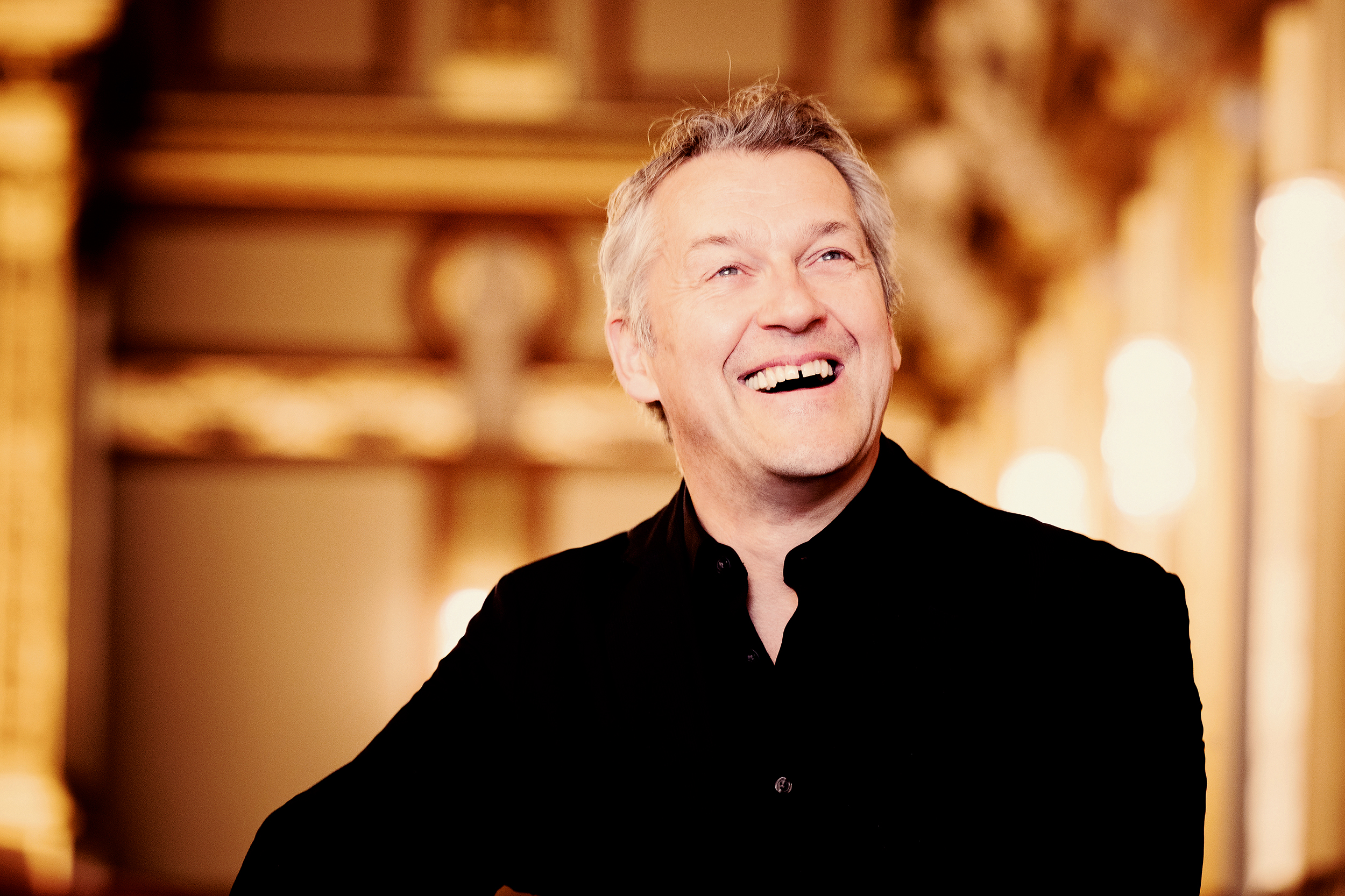
“Breathing life into music in a different way” and “building new bridges”: when Markus Poschner talks about how he wants to get audiences even more excited about the works he interprets, he uses phrases like these. Communication is a very important concern for the conductor, who will be the chief conductor of the ORF Radio Symphonie Orchester Wien from the 2026/27 season. He, who has been conducting the Bruckner Orchestra Linz since 2017 and will also be conducting the Basel Symphony Orchestra from the 2025/26 season, is convinced that „in the future, it will no longer be enough for the lights to come on at 7:30 p.m. at a concert, for the music to be played, and for everyone to go home at 10 p.m. Instead, we must show our enthusiasm for music in a variety of ways and connect with the audience.“
To achieve this, Poschner is deliberately reaching out to audiences at the Musikverein in the 2026/27 season with concerts in which explanations of the works and performances of a composition are intended to intertwine and merge with one another. In the new concert series “Poschner’s Milestones,” the conductor wants to present groundbreaking works from the 20th century, such as those by Dmitri Shostakovich and Béla Bartók, together with the orchestra in the Great Hall of the Musikverein. Markus Poschner will explain these milestones in music history, examine them musically together with the orchestra, and clarify their background and context. Talking about music will flow directly into playing the works, whereby Poschner, as he himself says, “does not simply want to impart knowledge that anyone can read about anyway, but emotions and experiences.” In addition, Poschner will also give introductory talks on the pieces of the evening in the ORF RSO Wien subscription concerts he conducts, sharing his musical experiences with the audience. “For me, it’s important that the audience also knows about the challenges and special features involved in the production. We will also reveal secret knowledge that might otherwise rarely or never be discussed – and we want the audience to know what fascinates and preoccupies us about the respective work before we start playing,” Poschner notes. “It’s less about understanding the work in its entirety and more about conveying our personal passion for it.”