musikverein
0
Scroll to top
In the 2026/27 season, we will dedicate a concert cycle to our honorary member Franz Welser-Möst, who will also appear with the Cleveland Orchestra for the last time as its principal conductor.

The Value of Beauty

by
Walter Weidringer
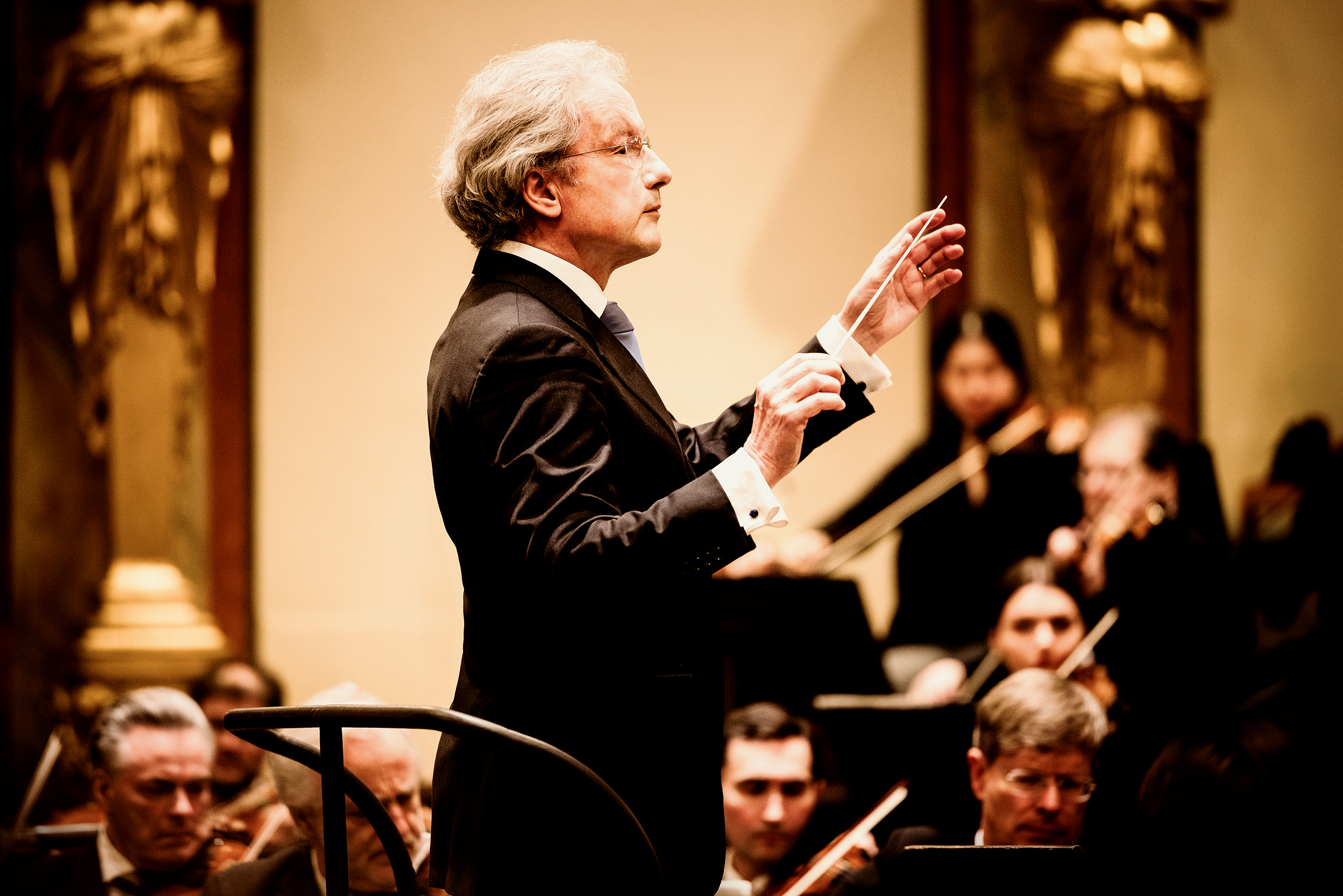
Portrait von Franz Welser-Möst beim Dirigieren im Großen Saal
© Julia Wesely

“O stay, beloved day,” sings Daphne in her first appearance, “Do not yet bid farewell! / Do not yet surround / My face with the red of melancholy.” In the end, she undergoes a transformation, must say goodbye – and yet can remain by taking on another form, becoming a laurel tree.
Finiteness is an indispensable part of existence, the knowledge that farewell will come at some point. Farewell also resonates when Franz Welser-Möst makes his final guest appearance as chief conductor of the Cleveland Orchestra in the Great Hall of the Musikverein in October, before stepping down from this position in 2027 after a quarter of a century. The world has certainly changed since 2002 and does not seem to have become any safer: ‘I believe,’ Franz Welser-Möst said recently in an interview, ‘that in a time that is considered so fearful and difficult, art has the task of spreading something else: hope, for example.’

Hope, then. Hope such as that which pulsates through Bohuslav Martinů’s Symphony No. 2 with its dance-like verve and melodic charm, even in difficult times: The work was commissioned by Cleveland’s Czech émigré community and premiered in 1943 by the Cleveland Orchestra under Erich Leinsdorf – a delightful gift, accompanied by Johannes Brahms‘ Second Symphony, which also ends in radiant D major, and Franz Liszt’s ‘Orpheus’, which evokes the transcendental power of music.
The fact that all this cannot happen without knowledge of suffering and pain, and that beauty only has value if we recognise it as transitory, is the theme of the second Cleveland evening: with a suite compiled by Franz Welser-Möst from Richard Strauss’s late work ‘Daphne’, composed entirely in this spirit, and Dmitri Shostakovich’s sombre Symphony No. 8, written at the same time as Martinů’s cheerful Second.

Portrait des Profils von Franz Welser-Moest - fotografiert von Julia Wesely
© Julia Wesely
‘In a time that is considered so fearful and difficult, art has the task of spreading something else: hope, for example.’

The other two evenings in this cycle are devoted to sacred music of the Viennese Classical and Romantic periods, naturally featuring the Singverein der Gesellschaft der Musikfreunde, of which Franz Welser-Möst has long been an honorary member. The simplicity and intimacy of Franz Schubert’s ‘German Mass’ finds its counterpart in the austere grandeur of Anton Bruckner’s Mass in E minor. But first, 200 years after Ludwig van Beethoven’s death, the Singverein, the Wiener Philharmoniker and a hand-picked solo quartet will come together under Welser-Möst’s baton for the monumental ‘Missa solemnis’, which, in its praise of God, thoroughly permeated by doubt, stylistically summarises the entire history of music. Above the score is written: ‘From the heart – may it touch the heart again’.

Konzerte
Ausschnitt einer Landkarte von Wien, in der der Wiener Musikverein markiert ist.
Identity Lab
Die Saison
25/26

Choose your cookie settings:

Cookies sind kleine Textdateien, die von Websites auf Ihrem Gerät gespeichert werden. Sie enthalten Informationen über Ihr Surfverhalten, z. B. Login-Daten, Spracheinstellungen oder Warenkörbe. Cookies helfen dabei, Webseiten nutzerfreundlicher zu machen und personalisierte Inhalte oder Werbung anzuzeigen. Sie können in Ihrem Browser verwalten, welche Cookies gespeichert werden dürfen.